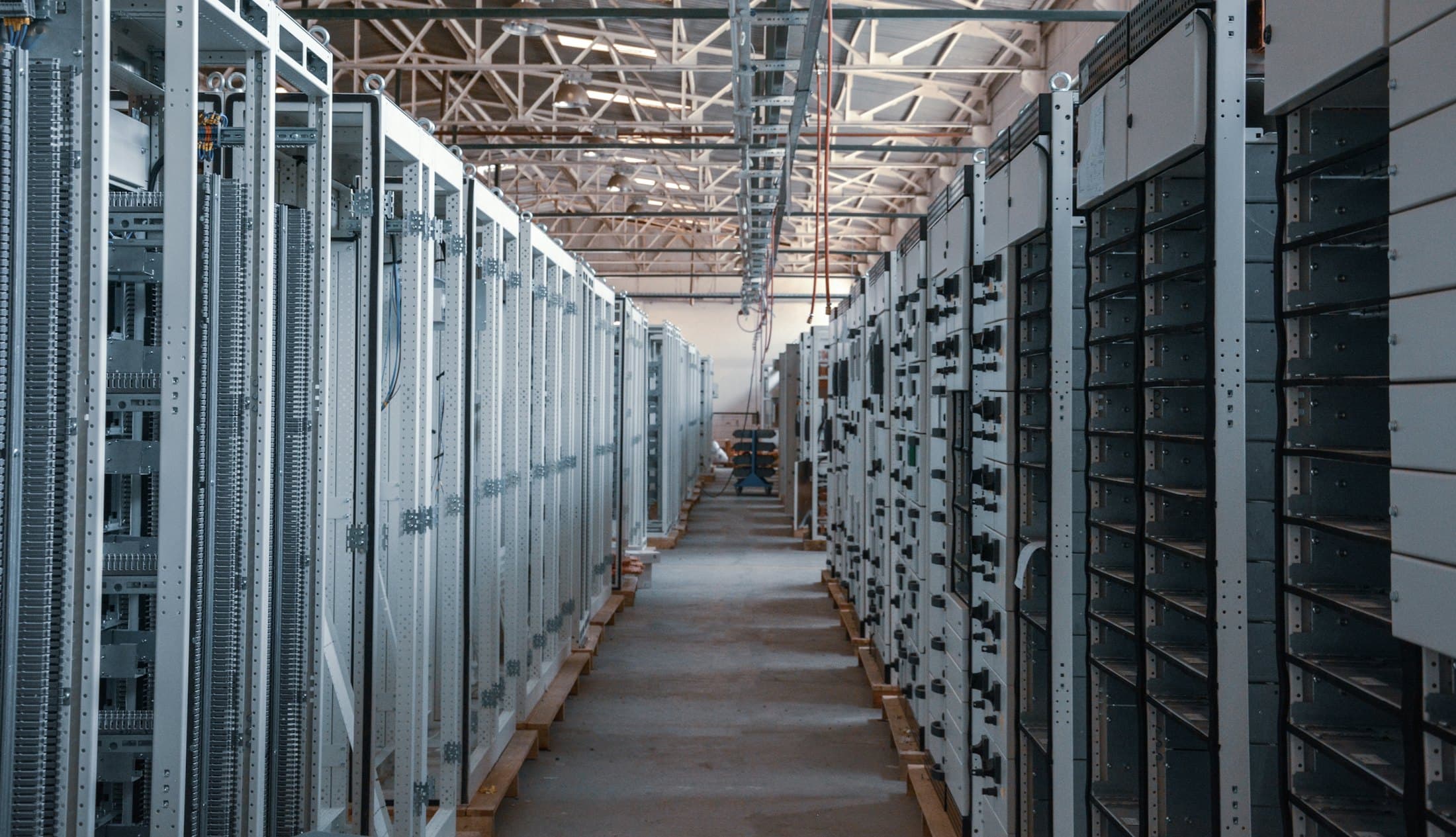
AI and HPC deployments are pushing rack densities far beyond traditional data hall design. Power, cooling and commissioning strategies all need to change.
High-density AI and HPC racks change the fundamentals of data centre design. Facilities that were planned around air-cooled, moderate-density white space are now being asked to support liquid cooling, much higher electrical loads per rack and rapidly changing customer requirements.
Power: plan for the step change
Higher rack densities concentrate electrical load. Busway and distribution sizing, selectivity, harmonic behaviour and the capacity of upstream UPS and generator systems all need to be reviewed against realistic load profiles, not legacy averages. On grid-connected campuses, the connection capacity and the regulatory timeline for it become critical-path items.
Cooling: liquid changes the commissioning scope
Direct-to-chip and other liquid cooling approaches introduce new systems into the white space: coolant distribution units, secondary fluid networks, leak detection and new control interfaces. Each of these needs its own functional testing and must be included in integrated systems testing.
- Flushing, filling and water quality procedures for secondary loops
- Leak detection and isolation verified under test
- Control interaction between CDUs, facility water and BMS
- Failure scenarios that include loss of liquid cooling, not just air
Design for change
AI hardware generations move faster than building lifecycles. Owners benefit from a Basis of Design that defines how density can increase over time — spare pathways, modular distribution and cooling infrastructure that can be extended without disrupting live operations.
Testing at real load
Integrated systems testing for high-density halls should reflect the heat and electrical load the facility will actually see. That means planning load bank strategies — including liquid-cooled load banks where appropriate — early in the project, not at the end.
High-density readiness is decided in the Basis of Design, and proven in IST.